Best 10 Profitable Winter Crops to Grow in India
Published on: 15-Oct-2026
Updated on: 15-Oct-2026
Machinery
Tractor Blog
Table of Contents
Best 10 Profitable Winter Crops In India 2026
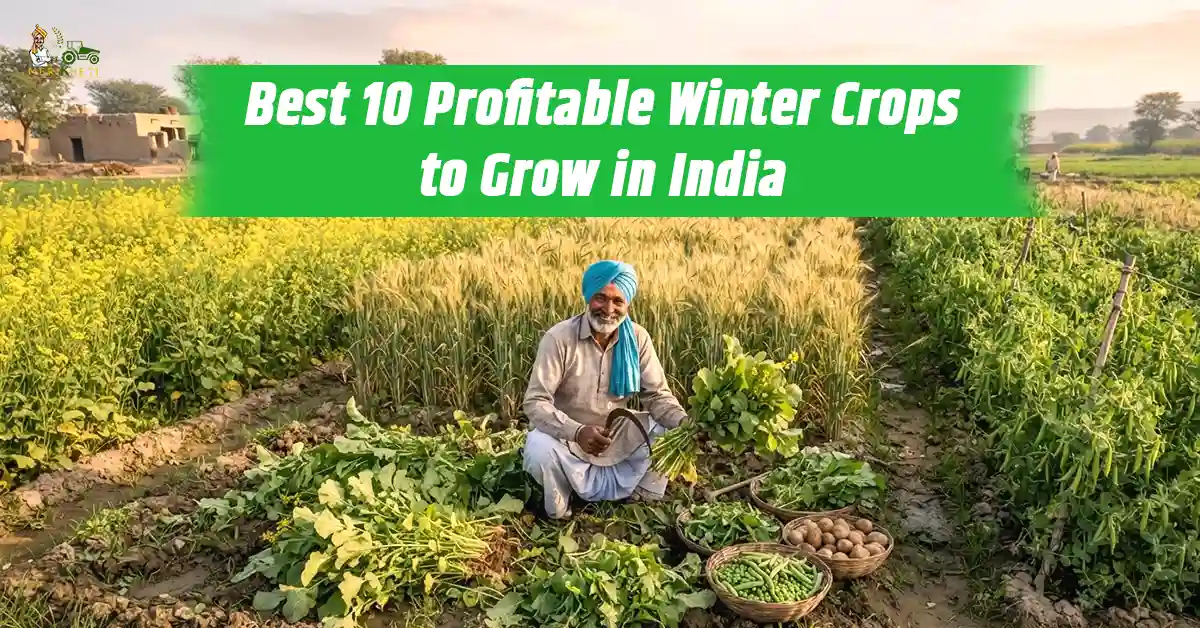
Winter is one of the most important agricultural seasons in India, offering farmers excellent opportunities to grow crops suited to cool weather and seasonal market demand. The Rabi season generally begins with sowing between October and December, while harvesting takes place from March to April, depending on the crop, variety, and region. Choosing the right winter crop can help farmers improve productivity, manage cultivation expenses, and increase farm income.
Several crops, including wheat, mustard, chickpea, potato, peas, garlic, onion, cauliflower, coriander, and barley, are popular during winter. Their profitability depends on factors such as soil quality, irrigation facilities, seed selection, weather conditions, labour costs, and market prices.
Here are the 10 most profitable winter crops to grow in India, along with their cultivation requirements and commercial benefits.
1. Wheat
Wheat is one of the major Rabi crops in India, which is a reliable option for farmers to ensure a continuous market. It is extensively grown in Uttar Pradesh, Punjab, Haryana, Rajasthan, Madhya Pradesh and Bihar.
Wheat is quite tolerant of cool weather in the growing stage and dry in maturity and harvest. Most soils are favourable and must be a fertile, well-drained loam. Soil preparers and farmers can obtain better yields if they sow their crops at the right time, use balanced fertilisers, and provide proper watering.
A key benefit of wheat growing is that it requires constant demand for domestic use, flour manufacturing and food processing. For eligible farmers, there is the possibility of receiving additional price support from Government procurement and/or the Minimum Support Price (MSP) (if applicable).
Wheat is a water-loving crop but can be irrigated efficiently to minimise wastage. Farmers should choose varieties which can be grown in their geographical location and should adhere to recommended sowing times.
2. Mustard
Mustard is an important oilseed crop and a lucrative winter crop, especially in Rajasthan, Haryana, Madhya Pradesh and Uttar Pradesh. It has a relatively low requirement for water, which is good for areas with limited irrigation facilities.
Mustard is a cool-weather crop and can produce good returns if yields and selling prices are appropriate. The seed is utilised for edible oil, and mustard cake is valuable for livestock feed and improvement of soil.
The farmers must choose the appropriate varieties based on their climate and soil conditions. The correct time of sowing, correct nutrient application, weed control and frequent pest checking can increase productivity.
Mustard is also a good option for diversification from cereal cultivation. Before choosing how much land to dedicate, farmers should weigh up the price of oilseed crops, weather risk and local opportunities for purchasing crops.
3. Chickpea (Gram)
Chickpea or gram (chana) is a highly valuable pulse crop which is grown in Rabi season. States such as Madhya Pradesh, Maharashtra, Rajasthan, Uttar Pradesh and Karnataka are the important producing states.
Chickpeas are able to thrive on well-drained soil and do not need as much water as many other field crops. The plant is a legume that cooperates with other soil bacteria to bind atmospheric nitrogen to the soil, thus promoting soil fertility and crop rotation.
The demand is still strong as chickpeas are used in the preparation of gram flour and other products at the household level in India. They can be relatively low-cost to grow and appeal to farmers.
Over-irrigation and waterlogging should be avoided. Proper variety selection, weed control and disease detection and management are practical steps that can be taken to enhance yields and minimise losses.
4. Potato
Potato is a high potential winter crop with good returns under favourable market conditions. It is highly cultivated in Uttar Pradesh, West Bengal, Bihar, Punjab and Gujarat.
A crop that thrives in cool weather and needs fertile, well-drained soil. Good yields will be obtained if the following are the case: good quality seed tubers; correct planting time; correct fertilisation; and good irrigation management.
Households, restaurants, food processors, and wholesale markets are all good consumers of potatoes. Cold storage might provide some advantages in terms of the timing of the farmer's sale, but this will depend on the farmer's ability to pay for the storage costs and to withstand price fluctuations.
A considerable investment in seed tubers, fertilisers, labour, irrigation and crop protection is needed in potato cultivation. Farmers need to determine production costs for their crops and consider the market before planting large areas.
5. Peas
Peas are a common winter vegetable crop that are in demand for fresh markets and food processing. They can yield income in a relatively short growing time, depending on variety.
Peas will grow in cooler weather and in fertile, well-drained soils. Varieties, sowing time, irrigation and balanced nutrition promote good growth and pod formation.
Early or limited market supplies of fresh green peas can make for an appealing price for the producer. But, during the time when a large number of farmers have the produce, prices may drop.
Farmers should sow their crops according to the local demand, and the variety they grow should be suited to the geographical location. Prompt harvesting and handling, and rapid movement, help to minimise post-harvest losses and maintain freshness.
6. Garlic
The garlic crop is an important crop for winter and has been utilised for culinary purposes as well as food processing in Indian cuisine. It may be a good investment opportunity due to its consistency in demand and the availability to store under proper conditions.
Garlic grows best in cool weather with well-drained soil. Creating quality bulbs requires healthy planting cloves, proper spacing, proper nutrition and controlled irrigation.
The crop needs investment in planting material and human resources, especially in planting, weeding and harvesting. The price varies depending on the quantity produced, available storage and demand in the region.
It is recommended that the farmers select varieties appropriate for their locality and properly cure their harvested crops. Adequate storage can help to maintain quality and minimise losses.
7. Onion
Onion is a commercial crop of national importance which is utilised throughout the year in households, restaurants and food processing industries. Onion production during the winter season can be profitable when production volumes and market timing are favourable.
It is a crop that needs appropriate soil conditions, healthy seedlings, adequate fertilisation and irrigation management. Do not waterlog, as this may cause bulb damage and be a source of disease.
Various factors such as weather, availability of crop, transportation, and storage affect the price of onions. Properly harvested and cured crops will yield higher quality and marketable products for farmers.
Using variety trials of regionally adapted cultivars and planning sales based on market conditions can help manage financial risk.
8. Cauliflower
Cauliflower is a winter vegetable that is in demand in the local markets. The production cycle is relatively short, depending on the variety, making it attractive to the farmer who needs quick seasonal cash flow.
Crops grow well in cool conditions and fertile, well-drained soil. Compact, marketable curds are produced with quality seed, adequate spacing, frequent irrigation and proper fertilisation.
When the demand for cauliflower is high, it can provide a good return when harvested. It is,s however, susceptible to spoilage and therefore harvesting, packaging and transportation need to be controlled.
One option farmers might want to explore is the possibility of planting staggered crops that would help spread harvest over a number of weeks and alleviate the need to sell off their crop at low prices.
9. Coriander
Coriander is grown for both fresh leaves and seeds, offering farmers flexibility according to local market demand. When cultivated for green leaves, it can be ready for harvesting in approximately 40–45 days under suitable conditions.
Coriander grows well in cool weather and well-drained soil. Quality seeds, appropriate moisture, and effective weed management are important for healthy growth.
Fresh coriander has regular demand among households, restaurants, and vegetable retailers. Its short growing period makes it useful for farmers seeking quick returns or fitting an additional crop into their cultivation schedule.
However, prices and yields vary with weather, demand, and harvest timing. Farmers should identify nearby buyers before planting commercial quantities.
10. Barley
Barley is a hardy Rabi crop that offers an alternative to wheat in suitable regions. It is cultivated in Rajasthan, Uttar Pradesh, Haryana, Madhya Pradesh, and other parts of India.
The crop can tolerate relatively dry conditions better than some other cereals, making it useful where irrigation is limited. Barley is grown for food, animal feed, malt production, and industrial applications.
Its manageable cultivation requirements can make it attractive to farmers seeking crop diversification. However, profitability depends on the selected variety, yield, and access to buyers, particularly for specialised malting barley.
Farmers should confirm local demand and quality requirements before selecting a variety for commercial cultivation.
Tips to Increase Profitability from Winter Crops
Farmers can improve their chances of earning better returns by selecting crops according to soil conditions, climate, and market demand. Using quality seeds, managing irrigation efficiently, monitoring pests and diseases, and applying fertilisers according to crop requirements can help control expenses.
Harvesting at the correct maturity stage is equally important. Farmers should compare local mandi prices, identify potential buyers, and consider storage and transportation costs before selling their produce. Calculating the total cultivation cost helps determine whether a crop is likely to generate a reasonable profit.
Conclusion
Wheat, mustard, chickpea, potato, peas, garlic, onion, cauliflower, coriander, and barley are among the best winter crops to consider in India. Each offers different advantages in terms of investment, water requirements, growing duration, and market opportunities.
The most profitable winter crop depends on local conditions, expected yield, cultivation expenses, and selling price. By planning carefully, choosing suitable varieties, and following efficient farming practices, farmers can improve productivity, manage risks, and increase income during the Rabi season.
Category