Organic Farming vs Traditional Farming: Which is More Profitable?
Published on: 13-Jul-2026
Updated on: 13-Jul-2026
Crops
Table of Contents
The agricultural sector is undergoing a significant transformation in India, with farmers seeking innovative strategies to boost productivity and profitability. One of the major controversies that is prevalent today is the talk of Organic farming vs Traditional farming. Though traditional farming has been the mainstay of Indian agriculture, organic farming is being talked about in the light of the increasing demand for chemical-free food and sustainable farming practices.
There are pros and cons to both of these methods of farming. The selection of the appropriate one is based on various criteria, including land, crop, market access, investment and long-term objectives. Let's get a comparison of organic farming and traditional farming to understand which one can be more profitable for the farmers of India.
What is Organic Farming?
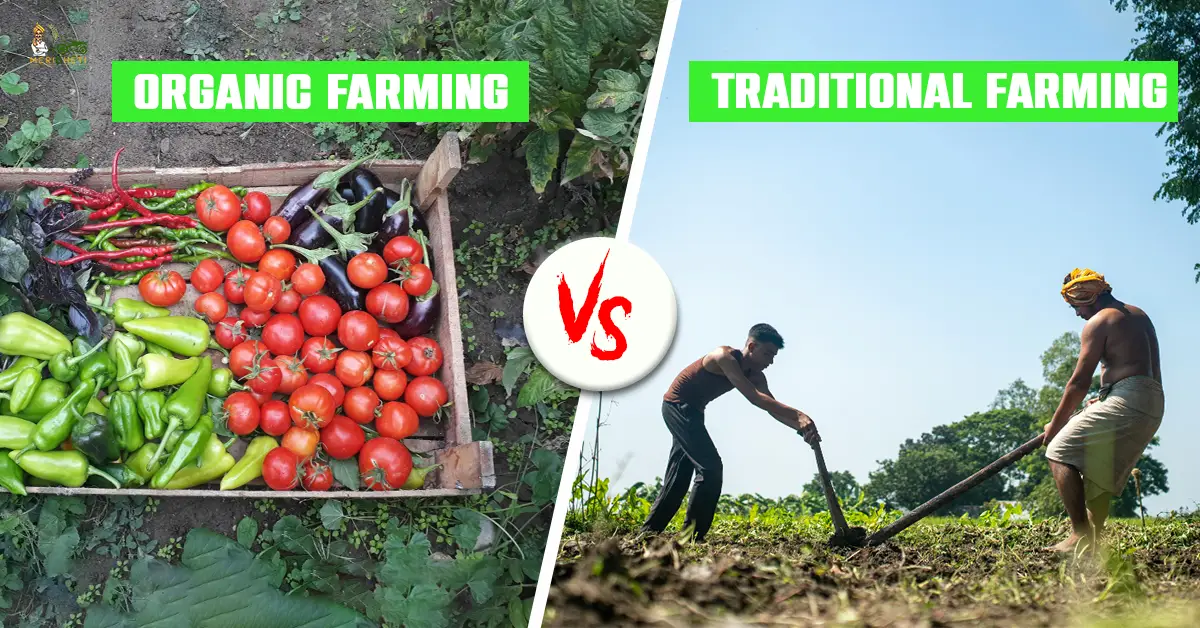
Organic farming is a way of farming that does not use synthetic fertilisers, pesticides, herbicides or genetically modified seeds. Rather, the farmers depend on natural inputs like compost, farmyard manure, vermicompost, bio-fertilisers, crop rotation, green manure and biological pest control.
The core principles of organic agriculture are to enhance soil health, conserve biodiversity and ensure food safety without chemical inputs.
What does "Traditional Farming" mean?
Conventional farming or traditional farming involves the application of chemical fertilisers, pesticides, improved seeds, irrigation and modern machines, which are used to produce amaximum yield of crops. Indonesia's approach has been successful in improving food production over the decades, and is the most commonly adopted farming system in Indonesia.
The traditional farming system is mostly concerned with production rate and yield.
Cost of Cultivation
Organic farming is frequently used to reduce the amount of synthetic fertilisers and chemical pesticides, and allows farmers to spend less money. Farmers will have to spend more time and labour on preparing the compost, weed control and biological solutions to insect pests.
The investment in traditional agriculture is typically more expensive with the use of chemical fertilisers, pesticides and plant protection products. These costs can rise substantially when prices for inputs are on the rise.
Crop Yield
During the first years, organic farming can result in reduced yield, and the land may take some time to adapt to organic farming. After the soil fertility has improved, production is often more stable, but for some crops, it may be lower than that obtained under intensive conventional cultivation.
The traditional farming system tends to produce higher yields, as high-yielding varieties of seeds, chemical nutrients and crop protection chemicals are used. This is appealing to farmers with the aim of maximising production.
Market Price and Profitability.
The best part of organic farming is that the certified organic produce fetches a handsome price tag in the market. There is a growing demand for paying premium prices for chemical-free fruits, vegetables, cereals, spices and pulses. When farmers can reach reliable buyers or retail markets, or have opportunities to export, the higher price can make up for the reduced production and still increase profits.
The traditional farming practice has a well-established marketing system and has a stable demand. Produce is typically sold at the regular market price with no premiums, but with high production volumes, significant income can be earned, particularly in favourable market conditions.
Environmental Impact
Organic farming ensures better soil health, water conservation, biodiversity and a lesser amount of chemical pollution. It is thought to be a sustainable way of developing agriculture in the long-term.
While traditional farming methods have contributed significantly to food production, overuse of chemical fertilisers and pesticides can lead to environmental risks and impacts if not managed properly, including those on soil fertility, water quality, and environmental sustainability.
Which Farming Method is more profitable?
No "one-size-fits-all" solution for all farmers.
There are better opportunities for organic farming to be more profitable when there are consumers, premium markets, export opportunities, or certification. It is particularly suitable for high-value crops like vegetables, fruits, spices, herbs and medicinal crops.
Farmers who value increased yield, existing value chains, and production of staple crops such as wheat, rice, and maize will find traditional farming to be a viable option.
Some farmers are also turning to integrated farming methods, which involve a blend of modern technology and more sustainable practices like less chemical usage and better soil management.
Final Thoughts
Organic farming and traditional farming have their own merits. Traditional farming offers higher productivity and known market access, while organic farming is beneficial in supporting long-term healthy soil, which promotes environmental sustainability and premium pricing. The most lucrative strategy will vary based on market demand, farm size, resources and crops.
When deciding which farming approach to follow, Indian farmers must consider the production costs, potential crops, and market prospects. Both systems, if planned and managed properly, can be a part of profitable and sustainable agriculture.
Category



Best Profitable Crops for Indian Farmers in 2026
11-May-2026

Subsistence Farming in India
22-Apr-2025
Terrace farming in India
14-Apr-2025
Cotton farming in India
14-Apr-2025