Cyclone Arnab Disrupts Monsoon Withdrawal in Uttar Pradesh, Heavy Rain Damages Crops
Published on: 28-Sep-2026
Updated on: 28-Sep-2026
News
Farmer News
Table of Contents
Cyclone Arnab Alert
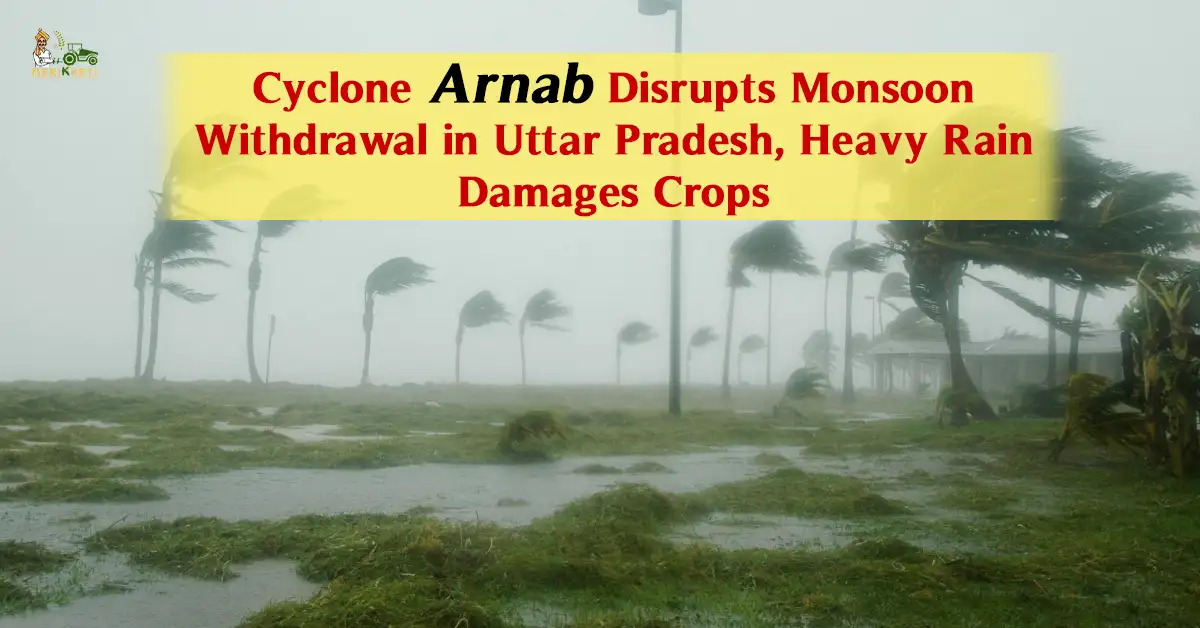
The impact of Cyclone Arnab has disrupted the withdrawal of the monsoon in Uttar Pradesh, with western parts of the state continuing to experience heavy rainfall and strong winds. The weather system has also affected agricultural activities, with standing paddy, sugarcane and vegetable crops reported to have suffered damage in several areas.
According to a report published on September 26, the monsoon withdrawal over western Uttar Pradesh remained stalled for around four days as the cyclonic system continued to influence weather conditions across the state. Heavy rainfall was reported from western to eastern Uttar Pradesh, while strong winds further increased the risk to standing crops.
Heavy Rain and Strong Winds Affect Farmers
The weather conditions have created difficulties for farmers, particularly those with standing crops nearing harvest. In several areas, strong winds caused mature paddy crops to lodge, or fall to the ground, while sugarcane and vegetable crops were also affected.
Reports from Ayodhya said strong winds over two days damaged standing crops, with paddy fields particularly affected. Ready-to-harvest sugarcane was also reported to have suffered damage, increasing concerns among farmers about potential losses.
Heavy rain and waterlogging can create additional problems for agricultural fields. Excess moisture can delay harvesting and field operations, while crops that remain submerged for extended periods may face quality and yield losses depending on their growth stage and local drainage conditions.
Monsoon Withdrawal Comes to a Halt
The weather system has also affected the normal progression of the southwest monsoon withdrawal from Uttar Pradesh. The withdrawal had already begun, but the continuing influence of the system kept rainfall active across parts of the state.
The monsoon normally enters Uttar Pradesh through the Sonbhadra region around June and begins withdrawing later in the season. This year's delayed monsoon pattern has now been followed by another spell of widespread rainfall, making the withdrawal process slower than expected.
The continuing rain has also affected river levels and low-lying areas. Flood-affected regions have faced additional difficulties as rainfall added to existing waterlogging and flooding concerns.
Impact on Paddy and Other Crops
Paddy is among the crops facing significant weather-related risks during this period because much of the crop is approaching maturity and harvesting in several areas. Strong winds can cause mature plants to fall, while excessive rainfall can make harvesting difficult and increase the risk of crop deterioration.
Other crops, including pulses, oilseeds, vegetables and sugarcane, can also be affected by strong winds and excess moisture. Reports have also highlighted damage to early paddy as well as crops such as sesame, sorghum, pearl millet, urad and moong in parts of Uttar Pradesh.
Farmers Face Additional Challenges
For farmers, the timing of the rainfall is particularly important. Crops that are close to harvesting may be more vulnerable to lodging and quality losses, while fields that remain waterlogged can delay harvesting and transportation.
Vegetable growers may also face problems from prolonged wet conditions, including damage to plants and difficulty accessing fields. Farmers in flood-prone areas are likely to face additional challenges where drainage remains inadequate.
Authorities have advised people to remain alert as heavy rain, strong winds and waterlogging continue to affect several parts of the state. Local weather conditions can vary significantly, so farmers are advised to follow weather advisories and agricultural department recommendations for their districts.
Weather Conditions Begin to Improve in Some Areas
By September 27, reports indicated that the impact of the system had begun to weaken over parts of eastern Uttar Pradesh, with weather conditions improving in areas including Varanasi and surrounding districts. However, rainfall-related concerns remained in other parts of the state.
The latest developments suggest that the weather system has brought an additional spell of rain at a critical stage of the agricultural season. For farmers, the key concerns remain crop lodging, waterlogging, delayed harvesting and potential quality losses in mature crops.
What Farmers Should Watch For
Farmers should closely monitor local weather advisories before harvesting or carrying out field operations. Where fields are waterlogged, proper drainage can help reduce prolonged standing water. Mature crops that have fallen because of strong winds may also require timely attention to reduce further losses, depending on crop condition and field accessibility.
Farmers should also document visible crop damage and contact their local agriculture or revenue authorities if crop-loss assessment or government relief procedures are applicable in their area.
Overall, Cyclone Arnab's influence has interrupted the monsoon withdrawal over Uttar Pradesh while bringing heavy rainfall and strong winds during an important period for farmers. With several crops approaching maturity, the next few days of weather conditions will remain important for agricultural activities across the state.
Category