Monsoon 2026 Update: Know When Rain Will Reach Your State
Published on: 14-May-2026
Updated on: 14-May-2026
News
Farmer News
Table of Contents
The monsoon 2026 dates for various Indian states have been released
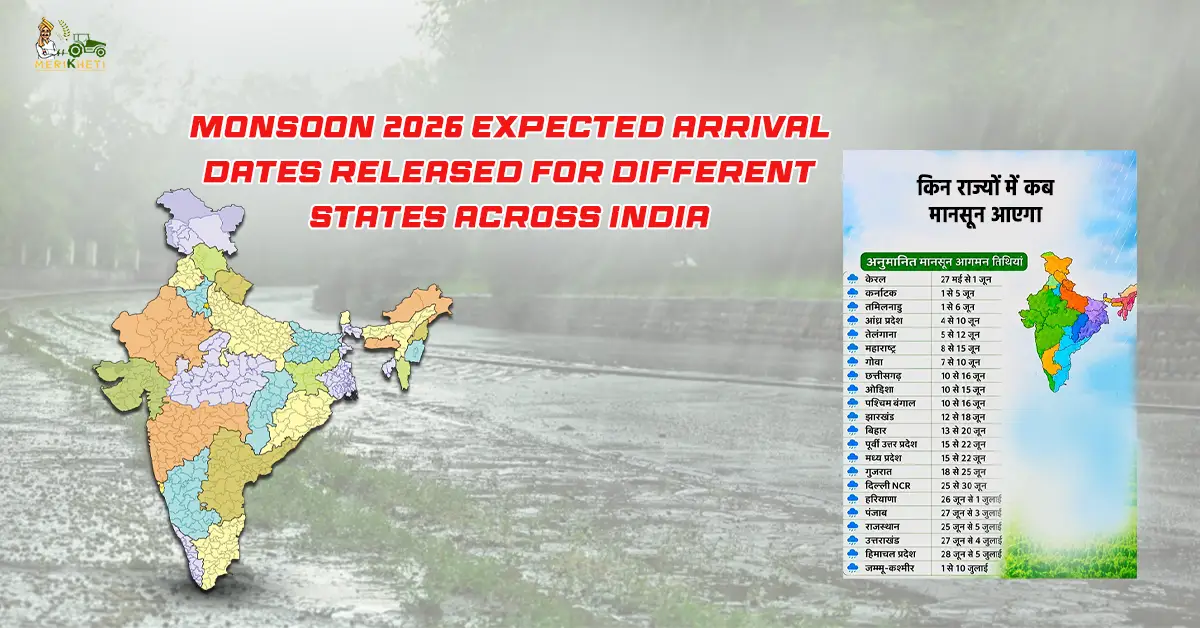
The expected dates of Monsoon 2026 in different Indian States have been announced.
The expected month-wise onset dates of the 2026 monsoon in various states of India have been released for the monsoon season, reflecting the weather patterns and seasonal timelines. The southwest monsoon is expected to set in from Kerala from 27 May to 1 June and move towards the northern states in early July as per the projected timeline.
These estimated dates have been determined based on present weather conditions and monsoons, and may be subject to change due to climatic developments.
Expected Monsoon Arrival Dates in Major States
| State | Expected Monsoon Arrival |
|---|---|
| Kerala | 27 May to 1 June |
| Karnataka | 1 to 5 June |
| Tamil Nadu | 1 to 6 June |
| Andhra Pradesh | 4 to 10 June |
| Telangana | 5 to 12 June |
| Maharashtra | 8 to 15 June |
| Goa | 7 to 10 June |
| Chhattisgarh | 10 to 16 June |
| Odisha | 10 to 15 June |
| West Bengal | 10 to 16 June |
| Jharkhand | 12 to 18 June |
| Bihar | 13 to 20 June |
| Eastern Uttar Pradesh | 15 to 22 June |
| Madhya Pradesh | 15 to 22 June |
| Gujarat | 18 to 25 June |
| Delhi NCR | 25 to 30 June |
| Haryana | 26 June to 1 July |
| Punjab | 27 June to 3 July |
| Rajasthan | 25 June to 5 July |
| Uttarakhand | 27 June to 4 July |
| Himachal Pradesh | 28 June to 5 July |
| Jammu & Kashmir | 1 to 10 July |
The arrival of the monsoon is highly important for Indian agriculture, especially for Kharif crop sowing. Farmers across the country are expected to begin preparations for Best Profitable Crops such as:
- Paddy
- Soybean
- Cotton
- Maize
- Pulses
A timely monsoon can improve soil moisture, reservoir levels, and overall agricultural productivity.
The image also mentions that these are estimated dates based on monsoon patterns and weather department observations. Experts have stated that changes in weather systems, cyclonic activity, or temperature fluctuations may alter the arrival schedule.
Citizens, farmers, and businesses are advised to follow official updates from the India Meteorological Department for accurate and updated forecasts.
- Southern states are expected to receive monsoon rains in early June.
- There could be rainfall in the central and eastern parts in the middle of June.
- Monsoon showers are expected in the Northern states from late June to early July.
In India, monsoon continues to be one of the most significant weather phenomena and directly influences the various aspects of agriculture, water supply, power production, and rural economy.
Category