Tea Farming in India: Complete Guide to Cultivation, Suitable States, Benefits & Top Tea Producing Countries
Published on: 30-Jul-2026
Updated on: 30-Jul-2026
Crops
Horticulture Crops
Table of Contents
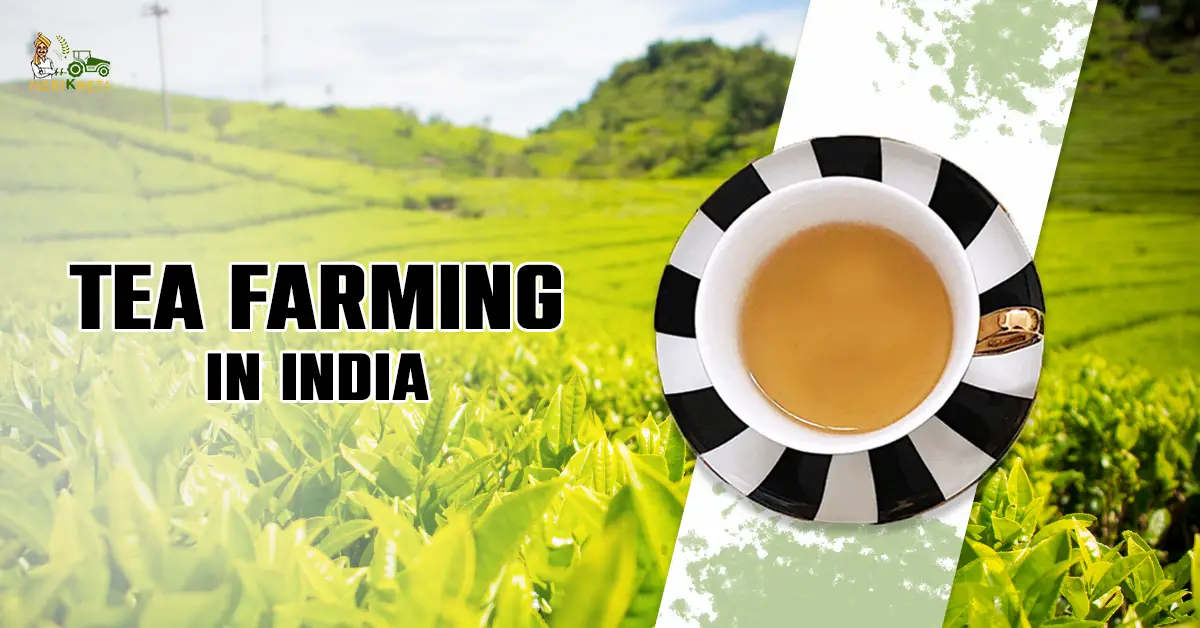
As we all know, tea is a popular drink in India. Here, everyone is crazy about tea, and tea is so important for everyone that the day does not start without tea. Here, you will find tea in every house, street, and corner, and not only this, but people outside India also like tea so much that its demand is touching the sky. It is the most profitable crop to harvest for you. How tea is cultivated in different regions of the world, its flavour also varies, and there are many types of tea.
Today, through this blog, we will tell you how you can also do tea farming and earn good profits. So, today with Merikheti, we will provide you with detailed information so that you can also do tea farming.
Essentials for Tea Crop Harvesting
Climate and Temperature
Climate and temperature are two key requirements for tea cultivation. Tea cultivation requires a temperature of 18 to 30 degrees Celsius, and 1500 to 2500 mm of rainfall is essential for its growth.
A mildly shaded and humid climate is considered best; prolonged dryness can harm tea. Therefore, when farming, it is essential to have all the resources necessary for it.
Soil Type
We know that farming depends on the soil. The better the soil, the better the farming will be. Each crop requires its own unique soil and environment. Acidic soil is considered best for tea cultivation, with a pH of 4.5–5.5 being considered ideal. Furthermore, red soil that allows water to drain easily is considered quite good.
Plant Preparation
Plants are propagated from seeds or cuttings. It takes 8-12 months for the nursery to develop into plants that are ready for further use. Once the plants are ready, they are planted in the fields.
Transplanting or Planting
Tea should be planted before the onset of the monsoon season, i.e., between June and August, for good yields. It is also important to consider planting spacing at approximately 1.2 x 0.75 meters or 1.5 x 1.0 meters, depending on the area.
Manure and Fertiliser
Fertiliser is essential for tea cultivation. Specialised decomposed cow dung manure is best for this type of cultivation. Furthermore, depending on the soil type of the field, you can apply nitrogen (N), phosphorus (P), and potash (K) fertilisers to improve yields. And when it comes to organic farming, using vermicompost and neem cake will also significantly increase crop strength and yield.
Irrigation
Tea cultivation is generally practised in areas with heavy rainfall, so irrigation isn't as necessary. However, drip irrigation during the summer has been shown to yield significantly better results.
Weeding and Pruning
Regular weeding is essential for removing unwanted weeds that grow during cultivation. Regular pruning of plants encourages the growth of new buds, leading to faster and greater yields.
Harvesting
Harvesting begins approximately three years after planting. During harvesting, remember to harvest only the top two leaves and one bud. Harvesting can occur multiple times per year, depending on the crop.
Production
If you take good care of your crop, you can definitely harvest approximately 2,000–3,000 kilograms of green leaves from one acre of land in one year. Tea cultivation depends on the weather; the better the weather, the better the yield.
Costs and Returns
Tea cultivation requires the most patience because it is a long-term crop. It takes a lot of time and money to establish the garden at the beginning of cultivation; only then is a tea field ready. It costs more to establish the garden in the initial 2-3 years because it is a long-term planting. Once the garden is prepared properly, it continues to yield crops for at least 40-50 years or even more.
So these were the important things that are worth remembering while farming. You can easily farm through this process. This farming depends on the states as to which states are suitable for doing this farming, or whose conditions are suitable for this. It is not said in which states of India farming can be done; it depends on their conditions.
Indian states are highly recommended for Tea Cultivation
- Assam - Highest production
- West Bengal (Darjeeling, Dooars) - High-quality tea
- Tamil Nadu (Nilgiris)
- Kerala
- Karnataka
- Tripura
- Arunachal Pradesh
- Manipur
- Mizoram
- Nagaland
- Meghalaya
- Sikkim
- Uttarakhand (Kumaon, Dehradun)
- Himachal Pradesh (Kangra)
States where tea cultivation is possible only in limited areas
- Madhya Pradesh (only some hilly and high-rainfall areas)
- Chhattisgarh
- Odisha
- Jharkhand
States where tea cultivation should generally be avoided
- Rajasthan
- Haryana
- Punjab
- Delhi
- Gujarat
- Most of the plains of Uttar Pradesh
- Most of the plains of Bihar
Top 5 Tea Producing States in India
- Assam
- West Bengal
- Tamil Nadu
- Kerala
- Arunachal Pradesh
Top 5 Tea Producing Countries
1. China
China is the world's largest tea producer. Tea is grown here in huge quantities, and its crops include two distinct varieties: green and black tea.
2. India
India is the only country in the world that leads in both export and consumption. Tea is cultivated here on a large scale, and it is also the second largest producer of tea in the world. India produces world-famous teas from Assam, Darjeeling, and the Nilgiris. India is considered a major producer of black tea.
3. Kenya
It is the largest producer and exporter of high-quality CTC black tea.
4. Sri Lanka
Known worldwide for Ceylon Tea.
5. Turkey
Produces large quantities of tea, primarily for domestic consumption.
Why India is special in tea production
- World's second-largest tea producer
- World-renowned tea varieties
- Geographical diversity
- Favorable climate
- Large domestic market
- Major source of employment
- High-quality orthodox and CTC teas
- Strong export presence
- GI-tagged tea (Geographical Indication)
- Long history and global reputation
Tea farming is a long-term plan that takes 2-3 years. After setting up a garden, it gives you production for 50 years or more time so you can get tea with continuity, and it does not require much effort, so you can also do tea farming now without any problem. Stay tuned for more information. With the companion Merikheti.
Category



Best Profitable Crops for Indian Farmers in 2026
11-May-2026
Subsistence Farming in India
22-Apr-2025
Terrace farming in India
14-Apr-2025
Cotton farming in India
14-Apr-2025